

retronauts.com
•
retronauts.com
Retronauts Episode 798: Resident Evil (2026)
Shockingly light on S.T.A.R.S.-power
Aggregating, enriching, and presenting the finest tech news from the golden age of computing.
Shockingly light on S.T.A.R.S.-power

At first glance, it’s hard to really guess why anyone should want to play the Game Boy version of Earthworm Jim in this day and age, when it’s trivially easy to play the original Mega Drive version of the game on portable devices. ModRetro’s decision to rerelease this version for the Chromatic is thus a bit of a bold move. But one that paid out surprisingly well when I actually tried to play this title and realized that this is a surprisingly good conversion. As a 1994 release, the original Earthworm Jim is a fairly sophisticated 16-bit title, complex enough that it really shouldn’t be possible to shrink its gameplay down to 8 bits. Yet somehow, that was exactly what Eurocom managed to do back in 1995. The controls are remarkably responsive. The titular invertebrate handles exactly as I would expect. While the awkward timing and sometimes obtuse mechanics are still here, they’re virtually identical to the 16-bit versions. If anything, the 8-bit version plays more intuitively, precisely because I know there are only so many ways to progress when I only have two buttons and such a simple interface. The Game Boy version isn’t all sunshine and roses, though. I think 90s era critics who maligned this conversion were mostly on-point, they were just on-point for reasons that Eurocom couldn’t really control. Namely, the limitations of the Game Boy itself. As it existed in 1995 without a backlight, there just wasn’t any good way for the typical player to make out the game’s graphic details, which are pretty critical for trying to figure out what to do next. The Game Boy’s need for batteries was also at cross-purposes with just how complete this version of the game is. Thirteen levels is a bit much to get through in a single sitting even setting aside the fact that Earthworm Jim is a notoriously difficult game. The Chromatic hardware solves the technical problems involved with the game being difficult to parse. But this ModRetro version also makes one critical alteration to the software that gives a solid argument to this version of Earthworm Jim being one of the best ones. There’s an unlockable level select. What I mean by this is, every time you make it to a new stage, the game’s save battery adds it to the level select. So, you can turn the game off, put it down, and start right at Pod Race without having to go through all the previous levels again. The trouble with most portable versions of Earthworm Jim now is that it’s too easy to cheat. There’s a decent chance you’re just emulating it after all, so why not just use save states for the most difficult parts? This ModRetro version softens the difficulty curve without getting rid of it entirely. Indeed, there’s even a nasty surprise at the end, in that the final level, Buttville, won’t unlock on the level select unless you beat Elevator in the same sitting. And Elevator is an ugly mess of the level, the worst in this conversion because it is far, far too easy to get stuck on spikes. But is it really the authentic Earthworm Jim experience if you don’t feel at least a little bit of frustration having to repeatedly guess at the exact way you need to input the buttons to get past a particularly frustrating level? This helps Buttville feel genuinely suspenseful too, since despite being one of the easier levels of the game, you really, really don’t want to get sent back to the title screen, forcing you to replay Elevator again. The experience is tough, yet not impossible, and is thus a genuinely satisfying joy to complete. I feel that even though I did cheat a little bit, albeit not on purpose. During the Pod Race level, I somehow managed to turn my pod into a glitchy mess, most likely because I shattered the glass at the same time the timer ran out. I could still land safely though and was lucky enough to be able to beat Bob the Goldfish without having to figure out how to reproduce the glitch. At this time, I was testing the game on the Super Game Boy, if anyone else wants to try. Earthworm Jim does have a custom palette, which helps quite a bit in terms of making it easier to distinguish Jim from his environment, but no custom border unfortunately. As a final note, the instruction manual looks pretty great! It is, so far as I can tell, mostly just the original manual but in color. Still, it has all the irreverent backstory and humor you need to get into just how genuinely weird this game is. The 8 bit demake aesthetic of this version just adds another lovable layer of strange to this title which for so many reasons, could only have been made in the nineties. The post A review of Earthworm Jim for the Chromatic appeared first on Old School Gamer Magazine.
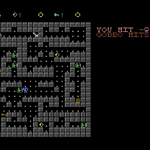
At the end of part eight, the goblins could chase you around the dungeon, but they couldn’t actually hurt you. The only damage you ever took was the five points I docked you for missing. When I came back to write this part, I found out that your sword wasn’t doing much to them either. That turned out to be a bug in the code I published last time, so, yeah, this part starts with a big oops. After that the goblins get their own attacks, you can now die, and of course the game asks if you want another go. I added doors and keys, ran out of memory again, and had to move the whole screen to a different part of the C64’s memory to get it back. Open the finished program and edit it in your browser here: part9c.bas in the RGC online IDE. Each major chunk of changes is in the IDE if you want to follow along: part9a.bas fixes the combat bugs and moves the tiles onto characters you can type on a keyboard. part9b.bas adds doors and keys, places items and goblins properly, and moves the screen and character set to get more memory for BASIC. part9c.bas gives the goblins attacks of their own, and adds game over with a play again option. The bug in part eight’s combat Here’s the line from part eight that applied your damage to a goblin: GH(GC)=GH(GC)-DMG GH is the goblin health array, and the index should be G, the goblin you’re fighting. Oops, GC is the goblin count. So every hit you landed went to whichever goblin happened to be last in the list, wherever it was standing on the map. You could whittle down a goblin on the far side of the dungeon without ever going near it. The second problem was when you walked into a goblin. That code set G=0 as a marker meaning “we don’t know which goblin this is”, and I said in part eight that we’d fix that “(yet)”. The death check only fired if G was bigger than zero, so the goblin you were actually hitting could never die from your blows. Both are one-letter mistakes that make no noise. Nothing crashes and there’s no error message, the game just quietly does the wrong thing, which makes them the worst kind of bug to find in BASIC. The fix is to find out which goblin is standing on the square you just tried to walk into. We already have their positions in GX and GY, so it’s a loop through the list: FINDGOBBO: REM WHICH LIVE GOBBO IS STANDING ON PX/PY? 0 = NONE G=0 FOR N=1 TO GC IF GX(N)=PX AND GY(N)=PY AND GH(N)>0 THEN G=N NEXT N RETURN The GH(N)>0 test is important because dead goblins keep their coordinates. Without it, a dead goblin’s old square would still count as occupied, and you could end up “fighting” a corpse. The collision handler now calls that before combat, and bounces you back to where you were standing: IF CH=38 THEN GOSUB FINDGOBBO:GOSUB COMBAT:PY=OY:PX=OX:GOSUB SHOWHUD:RETURN With G set to a real goblin, combat can damage the right one: REM DAMAGE THE GOBBO WE ARE FIGHTING (G), NOT THE LAST ONE IN THE LIST (GC) GH(G)=GH(G)-DMG IF GH(G)&lt;=0 THEN MSG$="GOBBO DEAD":GOSUB ERASEENEMY:GOSUB ALERT Tiles you can type in The character set got an overhaul in this part too. The dungeon tiles used to be in the shifted graphics block, screen codes 64 to 127. You can reach those with SHIFT on a real C64, but you can’t type them as plain text in the web IDE, and they turn into gibberish when you copy a listing into anything else. My first idea was to put the items on letters nobody would miss, like H for a heart, I for the idol and K for a key. That lasted until I looked at the HUD, which spells out HEALTH and KEYS. Every H became a little heart and every K became a key. So every tile is on a punctuation character now, and that works because of a handy quirk of the C64. For the characters from 32 to 63 (space, punctuation and the digits), the PETSCII code you type and the screen code that ends up in video memory are the same number. So a wall is a # in the listing, it’s 35 when you PEEK the screen, and 35 is also its ASCII code. You don’t need a lookup table in your head. Letters don’t work that way, and that’s the trap. K is PETSCII 75 when you type it, but its screen code is 11, so IF CH=75 will never match a K on the screen. Here’s the full list, which is also at the top of the listing: TileCharacterScreen codePlayer@0Wall#35Floor.46Door?63Cracked door‘39Goblin&38Rat)41Sword/47Jewel$36Key%37Heart+43Potion*42Chalice(40Shield[27Stairs up and down< and >60 and 62 Proper roguelikes use + for a door, but I wanted + for the heart, so doors went on ?. If you want to see the whole character set at once, run chars9viewer.bas in the IDE. There’s a catch that got me later in this part, and it’ll get you too. Every ? and / you PRINT is now a door or a sword. More on that when we get to the game over screen. Doors and keys A dungeon needs doors, and a door needs a key. I wanted two ways through, though, because it’s more fun when you have to choose. If you have a key, the door unlocks. If you don’t, you can shoulder it open, which costs you some health. The first shove cracks it (the door turns into a ') and the second shove breaks it. DOOR: REM TAKETILE LEAVES BK=1, SO THE DOOR OPENS NOW REM AND WE STEP THROUGH ON THE NEXT MOVE. IF KY>0 THEN KY=KY-1:MSG$="UNLOCKED":GOSUB TAKETILE:RETURN REM NO KEY - SHOULDER IT AND TAKE THE BRUISE HP=HP-2 MSG$="DOOR BASHED -2" GOSUB ALERT ROW=PY : COL=PX : GOSUB CURSORSET : PRINT "{BROWN}'"; RETURN Keys used to be worth ten gold, like everything else you picked up. Now you keep them. KY counts how many you’re carrying, and the HUD has a new column for it. The HUD uses the heart, jewel and key tiles as its labels, which saves screen space and looks much more like a game. Cracking the door open is a single PRINT. We move the cursor onto the door and print the cracked door character over it. The next time you walk into it, the collision code reads screen code 39 instead of 63 and runs DOORCRACKED, which breaks the door for good. Now we still need to show doors where they make logical sense but one step at a time. Goblin no-shows Part eight had a problem I only put on the to-do list. Goblins, and anything else you could pick up, were baked into the map tiles. Tile 17 was a room with a goblin in the middle, so the number of goblins depended on how many times the random map happened to pick tile 17. Some maps had none, and some had so many they hit the ten-goblin limit. Doors made that unacceptable. If a door appears on a map and no key does, the player is stuck, and that’s the game’s fault, not theirs. So the tiles are only corridors and rooms now, and a new routine called POPULATE decides what goes in them afterwards: POPULATE: GC=0 NG=INT(RND(1)*4)+3 IF NG>10 THEN NG=10 IT$="{GREEN}&" FOR N=1 TO NG GOSUB PLACEONE IF PF=1 THEN GC=GC+1 : GX(GC)=CX : GY(GC)=CY : GH(GC)=10 NEXT N REM EVERY DOOR GETS A KEY, SO A LEVEL IS ALWAYS WINNABLE ND=INT(RND(1)*3)+1 IT$="{BROWN}?" : FOR N=1 TO ND : GOSUB PLACEONE : NEXT N IT$="{ORANGE}%" : FOR N=1 TO ND : GOSUB PLACEONE : NEXT N (I’ve trimmed the REMs and the hearts, potions and treasure, which work the same way.) Now it’s a decision instead of luck. Three to six goblins, one to three doors, and the same number of keys as doors. There are always two hearts to heal with, and the sword and jewels finally turn up on the map, because the old tiles never included them. PLACEONE does the actual placing. It picks random squares until it finds floor: PLACEONE: PF=0 : TR=0 PLACETRY: TR=TR+1 : IF TR>200 THEN RETURN CX=INT(RND(1)*21)+1 : CY=INT(RND(1)*21)+3 IF PEEK(SA+LUT(CY)+CX)&lt;>46 THEN GOTO PLACETRY IF CX=PX AND CY=PY THEN GOTO PLACETRY ROW=CY : COL=CX : GOSUB CURSORSET : PRINT IT$; PF=1 RETURN This uses the same PEEK trick as the collision code: if the square holds screen code 46, it’s empty floor. The TR counter is the safety net. On a map that’s mostly walls, “keep trying until you find floor” could run for a very long time, and if there were no floor left it would never finish. After 200 tries it gives up and sets PF to 0 so POPULATE knows not to add a goblin that was never drawn. Out of memory, again The doors took us over the memory limit. I added the door code, pressed RUN, and got ?OUT OF MEMORY ERROR straight away on the CLR line, before the game had even started. Last time we moved a 2K character set to 14336 and told BASIC to stop there. That gave BASIC everything from 2049 to 14335, which is about 12K. Part 9a had used all but 642 bytes of it, so the doors were always going to be too much. The VIC-II can only see 16K of memory at a time, and it was looking at the bottom 16K. That’s why the character set had to fit underneath 16384, and BASIC had to fit underneath the character set. But the VIC can look at any of the four 16K banks. Bank 1 runs from 16384 to 32767, and it’s all plain RAM. So we put the screen and the character set at the top of bank 1, and BASIC gets everything below them. AddressPart 9APart 9B1024screenfree for BASIC2049 upBASIC program, variables, arraysBASIC program, variables, arrays14336character set, BASIC stops herefree for BASIC29696screen, BASIC stops here30720character set32767end of VIC bank 1 That takes BASIC from about 12K to about 27K, which should last us a good while. It takes four changes. The first is picking the bank, which is set in bits 0 and 1 of address 56576. That’s on one of the CIA chips, not on the VIC: REM VIC BANK 1. THE TWO BITS ARE INVERTED, SO REM 3=BANK0 2=BANK1 1=BANK2 0=BANK3. POKE 56576,(PEEK(56576)AND252)OR2 It’s the same read, mask and replace pattern as part eight, because the other six bits of that register do other jobs. AND 252 clears the bottom two bits, and OR 2 sets the value we want. The bits are inverted, so 2 means bank 1, not bank 2. I have no idea why Commodore wired it that way, but it’s been catching people out since 1982. The second change is register 53272, which we’ve met before. The top four bits give the screen’s position and the bottom four give the character set’s, both counted from the start of the bank. This time we’re setting both, so there’s nothing to preserve and we can POKE the number directly: REM 13*16 + 7*2 = 222 -> SCREEN $7400 CHARSET $7800 POKE 53272,222 The screen moves in 1K steps, so 13 is 13 x 1024 = 13312 into the bank, and 16384 + 13312 = 29696. The character set moves in 2K steps, and it’s the doubled value again like last time: 14 means 7 x 2048 = 14336 into the bank, which puts it at 30720. The third change is easy to miss. The VIC now shows the screen at 29696, but the KERNAL, the part of the ROM that handles PRINT, still thinks the screen is at 1024. It would carry on printing text into memory nobody is looking at. Location 648 tells it where the screen is, in 256 byte pages: POKE 648,116 116 x 256 = 29696. PRINT, the cursor positioning routine and the screen PEEKs all follow along, apart from one thing. The SA variable, which holds the screen address for our collision PEEKs, has to change from 1024 to 29696 too. The fourth change is the familiar one. We move BASIC’s ceiling down so it stops at the screen: IF PEEK(2)&lt;>73 THEN POKE 55,0:POKE 56,116:POKE 2,73:CLR It’s the same line as in part eight, with 116 instead of 56. Bank 1 has one catch. In banks 0 and 2, the VIC sees a copy of the character ROM, which is where the standard letters come from. Banks 1 and 3 don’t have that copy. So in bank 1 there’s no built-in font to fall back on, and our character set has to contain every letter and digit as well as the tiles. Ours already did, but if you try this with a character set that only replaces a few characters, all your text will turn to garbage. The file is now chars9b.bin. It’s the same character set as chars9.bin, except that the two-byte load address at the start of the file says 30720, not 14336, so LOAD "CHARS9B.BIN",8,1 puts it in the right place. A labels bug This one only affects you if you use labels. Part 9a had the label HOLDFORKEY twice, once in the change keys screen and once at the end of the character generator. I’d copied the wait-for-a-key loop from one place to the other and forgotten to rename it. The IDE converts labels into line numbers when it tokenises the program. When a label appears twice, the later one silently wins, with no warning. So the Y or N question at the end of the change keys screen jumped into the character generator’s wait loop, whose RETURN sent it somewhere completely different. Pressing N never let you redo your keys. The labels are now CONFIRMKEYS and PRESSTOPLAY, and if a GOTO ever lands somewhere impossible in your own code, search for the label to check there’s only one. Goblin attacks Now for the main event. Goblins nowmake their own attack rolls. Goblins make their own attack rolls Tabletop D&D uses one rule for both sides. You roll a d20, add your modifier, and if the total meets or beats the target’s Armour Class, you hit. So the player needs an AC, and like the strength modifier from last time, it comes out of the stats we rolled at the start. Dexterity gets you out of the way, so AC is 10 plus the dexterity modifier: REM ARMOUR CLASS: 10 PLUS DEXTERITY MODIFIER AC=10+INT((STATS(1)-10)/2) That goes in INITPLAYER, so it’s worked out once per character rather than every time a goblin swings. Last time, the goblins could already tell when they were next to you, because that’s when the fight started. So that line in ENEMYLOGIC stays. It just calls the goblin’s attack now, not yours: REM NEXT TO YOU? THEN IT SWINGS IF ABS(GX(G)-PX)&lt;=1 AND ABS(GY(G)-PY)&lt;=1 THEN GOSUB GOBBOATTACK And here’s the attack: GOBBOATTACK: GOSUB LOGLINE REM D20 PLUS 3, MEET OR BEAT YOUR AC TO HIT RL=INT(RND(1)*20)+1+3 IF AC>RL THEN PRINT "{GREEN}GOBBO MISSES";:RETURN REM D6 DAMAGE. MID$ DROPS THE SPACE STR$ ADDS DG=INT(RND(1)*6)+1 HP=HP-DG PRINT "{RED}GOBBO HITS -";MID$(STR$(DG),2); RETURN The goblin gets +3 to hit and does a d6 of damage. The miss test reads backwards on purpose. If your AC is bigger than the goblin’s roll, it has failed to meet or beat it, so it misses. With an average dexterity your AC is 10 or 11, so a goblin hits you a bit more than half the time, for three or four points. You start with twice your constitution in health, usually 20-something, so one goblin is a nuisance and three at once are a real problem. Those two numbers, the +3 and the 6, set how hard the game is. Change them and see what happens. I also switched your own attacks to meet or beat, changing IF D20<=8 to IF D20<8, so both sides play by the same rule. One log for everything Messages were the next problem. Everything so far went through ALERT, which printed on the top line of the screen, but now there can be several things to report in one turn. You swing, then maybe three goblins swing back. If they all used the top line, you’d only ever see the last one. New log area There was a whole empty area of screen to the right of the map, though. The map is 23 characters wide, so from column 24 there are 16 columns doing nothing. So that’s where every message goes now, yours and the goblins’, one line each, in the order things happen. A busy turn reads top to bottom like a little story: YOU HIT -5 GOBBO DEAD GOBBO HITS -3 GOBBO MISSES LOGLINE hands out the next free line. LA counts how many lines this turn has used: LOGLINE: REM NEXT FREE LOG LINE, RIGHT OF THE MAP. PAST REM 9 LINES WE REUSE THE LAST ONE RATHER THAN REM RUN INTO THE GAME OVER PANEL AT ROW 12 IF LA&lt;9 THEN LA=LA+1 ROW=2+LA : COL=24 : GOSUB CURSORSET RETURN The goblin attack calls it directly, because it picks its own colour for a hit or a miss. Everything else still calls ALERT, which now just asks for a log line and prints the message there: ALERT: REM YOUR MESSAGES GO IN THE LOG TOO. 15 CHARS REM FITS THE 16 COLUMNS RIGHT OF THE MAP GOSUB LOGLINE PRINT "{PINK}";LEFT$(MSG$,15); RETURN That’s the nice thing about having routed every message through one subroutine back in part seven. Combat, doors and item pickups all call ALERT already, so they all moved into the log without touching a single one of those lines. The only change they needed was shorter wording. “HIT GOBBO WITH 5 DAMAGE!” doesn’t fit in 15 characters, so it’s “YOU HIT -5” now, and “YOU BASH THE DOOR!” became “DOOR BASHED -2”. While I was shortening them, I made the pickups say what you actually got, so a jewel reads “JEWEL 10 GOLD” and a sword “STRENGTH UP 2”. The heart was going to be “HEALTH +4” until I remembered that + is the heart. It says “HEALED 4” instead, and the leading space STR$ adds to a positive number is, for once, exactly what we want. With the top line gone, the HUD moved up to take its place. That’s a one-character change to MV$, the string SHOWHUD prints before the HUD to position the cursor. It was HOME, DOWN, CYAN, and now it’s just HOME and CYAN. The log clears at the start of each turn, as soon as you press a key, so your action and the goblins’ replies stay on screen together until your next move: CLEARLOG: FOR N=1 TO LA ROW=2+N : COL=24 : GOSUB CURSORSET PRINT " "; NEXT N LA=0 RETURN It only clears as many lines as were used, and only if any were used (IF LA>0 THEN GOSUB CLEARLOG in KEYS, straight after the GET). Moving the cursor goes through a KERNAL call, which is slow in BASIC, so it’s worth skipping on the many turns when nothing happens. The MID$ in GOBBOATTACK is the fix I mentioned in part eight for the leading space that STR$ adds. Without it you’d get “GOBBO HITS – 4”. Damage that heals Shortening the combat message turned up one more bug from part eight. Your damage is a d8 plus your strength modifier. Roll a weak character, say strength 5, and the modifier is -3. A d8 roll of 1 or 2 then gives -2 or -1 damage, and subtracting a negative number from the goblin’s health adds to it. You’d be healing it. So damage has a floor now: IF DMG&lt;1 THEN DMG=1 MSG$="YOU HIT -"+MID$(STR$(DMG),2):GOSUB ALERT Stop reseeding the dice Part eight’s combat started every roll with R=RND(-TI), reseeding the random number generator from the clock. I explained it was there so you didn’t get the same rolls every game. Reseeding does do that, but only once is needed, and the character generator already does it before anything else rolls. Reseeding before every roll is a problem now that several dice can be rolled in one turn. TI only ticks 60 times a second. If two rolls happen within the same sixtieth of a second, they get the same seed, and they come out the same. So that line has gone from COMBAT, and the goblin attack never had it in the first place. Sorry, you died Death finally means something. The check goes in the spot we left for it in the game loop back in part eight: REM CHECK GAME OVER CONDITIONS HERE REM -------------------------------- IF HP&lt;=0 THEN GOTO GAMEOVER It runs after the goblins have had their turn, so the check comes once, after all the damage for that turn, rather than halfway through a goblin’s attack. Bashing a door also costs health, so you can knock yourself out on a door, and this check catches that as well. It’s a GOTO, not a GOSUB, and that’s deliberate. A GOSUB leaves a return address on the stack. If we GOSUBbed into the game over screen and then jumped from there into a fresh game, that return address would never be used. Die enough times and they’d pile up until BASIC ran out of stack space, which is the same trap as jumping out of a FOR loop in part eight. The main loop is the top level of the program, and nothing is waiting to be returned to, so a GOTO in and a GOTO out leaves nothing behind. GAMEOVER: REM GOTO NOT GOSUB, SO NOTHING IS LEFT ON THE STACK HP=0 : GOSUB SHOWHUD ROW=12 : COL=24 : GOSUB CURSORSET : PRINT "{RED}YOU DIED!"; ROW=14 : COL=24 : GOSUB CURSORSET : PRINT "{YELLOW}GOLD:";GL; REM NO ? OR / HERE - IN OUR FONT THOSE ARE A DOOR AND A SWORD ROW=16 : COL=24 : GOSUB CURSORSET : PRINT "{WHITE}PLAY AGAIN"; ROW=17 : COL=24 : GOSUB CURSORSET : PRINT "Y OR N"; HP=0 is cosmetic. A goblin hit can take you to -3, and “YOU DIED” next to a negative health figure looks like a bug even though it isn’t. Remember the catch from the tiles section? My first go at this said PLAY AGAIN? Y/N, and on screen it came out as PLAY AGAIN followed by a door, then Y, a sword and N. The ? and / are tiles now, and they will be in every message from here on. The key setup screen had the same problem, so “HAPPY WITH YOUR CHOICES?” is now “HAPPY WITH THESE KEYS, Y OR N”. Then we wait for an answer: PLAYAGAIN: GET A$ : IF A$="" THEN GOTO PLAYAGAIN IF A$="Y" THEN LA=0 : GOTO DRAWMAP IF A$&lt;>"N" THEN GOTO PLAYAGAIN It’s the GET loop from the key redefinition, with one difference. Anything that isn’t Y or N goes back round the loop. The player might still be holding a movement key when they die, and you don’t want a leftover P to count as “no”. Y goes back to DRAWMAP, which rolls a new character, a new map and new goblins. INITONCE doesn’t run again, because the FL flag is still set and the arrays are already DIMmed. DIMming the same array a second time gives you ?REDIM'D ARRAY ERROR. LA goes back to zero so the new game’s first turn doesn’t try to clear log lines from the last one. Tidying up when you quit If you press N, the game ends, but we moved a lot of things to get here. The VIC is looking at bank 1, the KERNAL is printing to 29696, and the font is ours. If we just ENDed, you’d drop out to a READY prompt in the dungeon font, and LIST would show you a program where every ? is a door. So the game puts it all back first: POKE 56576,(PEEK(56576)AND252)OR3 POKE 53272,21 POKE 648,4 POKE 53280,14 : POKE 53281,6 PRINT "{CLR}{LIGHTBLUE}THANKS FOR PLAYING!" END Bank 0, the screen back at 1024 with the ROM font (21 is the value the C64 powers up with), the KERNAL told the screen is at page 4 again, and the familiar light blue on blue. It’s the same four changes as the bank switch, done in reverse. BASIC’s lowered ceiling stays where it is, which does no harm until you switch off. [YOU: screenshot of the game over panel, and maybe the goblin attack log] What’s next The to-do list has got shorter, and for the first time this is a game you can lose. The next thing is to make it a game you can win. A way to win. There’s a chalice on every map now. Picking it up should probably end the level. More than one kind of enemy. The rat already has a tile, ), and no code. It’s a good excuse for a different movement pattern than “walk straight at the player”. The shield. It also has a tile and no code, and now that goblins roll against your AC, a shield that adds to it is an easy win. Fog of war, so you don’t see the whole dungeon on turn one. Stairs and levels. < and > are in the character set, waiting. A speed lesson. A turn takes about two thirds of a second, and I timed where it goes. Most of it isn’t the goblins’ thinking, it’s BASIC hunting through the program for each GOSUB, and moving the cursor to print one character at a time. There’s a whole part in making that faster. Doors that make sense. POPULATE drops doors on any empty floor, so they look like something to pick up. A door belongs across a corridor, where it actually blocks the way. The map already knows where those are: every horizontal or vertical corridor tile has a middle square with wall on both sides. So MAPROLL can note those squares as it draws, and POPULATE can pick its doors from that list, keeping the guaranteed number of doors and keys. All three versions are in the IDE if you want to poke at them: part9a.bas, part9b.bas and part9c.bas. Try giving the goblins +5 to hit, or a d8, and see how long you last. If you make something nastier, I’d love to see it! The post C64 BASIC Dungeon Crawler: The Goblins Strike Back appeared first on Retro Game Coders.

It’s been a while since we last wandered into dungeon-crawler territory, and Labyrinth of Ur is ready to drag us back in. Inspired by classics like Dungeon Master and Eye of the Beholder, this first-person 3D adventure from Ursimon was built entirely from scratch in C for unexpanded PAL machines, with a little help from AI. Players take on the role of Lance, a lone warrior who must descend into the darkness.

Another Amiga game is making the rounds, and this time it’s Heliobane — a new vertical shoot-'em-up from Coze for the Commodore Amiga 1200 AGA. Built as a custom retro rebuild of World 1 from the upcoming PC Steam game, it puts players in the cockpit of the HB-0 Heliobane, a specialized prototype ship piloted by Wren and sent to investigate the blazing star Aurel. The mission is a desperate

Software Amusements has unleashed Doody Calls - Turd World War, a brand new top-down squad shooter built from scratch for the Amiga A1200 AGA. It takes the classic v1.33 browser game and gives it a family-friendly, brown-toned tactical makeover, dropping players into the fray by way of the "Poo-nook" helicopter to take command of Squad Alpha, a highly

Time for some Amstrad fun, as developer Kirby2000 has unleashed a new fan conversion of the classic 1990 Game Boy title, Bubble Ghost, for the Amstrad CPC 6128. Players take on the role of a helpful spirit, guiding a fragile soap bubble through 35 treacherous chambers inside a haunted fortress, where direct contact is impossible and every move demands a careful touch.

Ash is an ambitious new platformer in development for the Commodore Amiga by Thomas Mayer Foss, and it leans hard into Norwegian folklore. Centered on the classic tales of Askeladden, the game follows the underestimated youngest brother as he sets out on a quest to win a princess and half a kingdom. To get past the game’s many obstacles, players can dynamically
After the monster success of Pokemon Red & Blue, Nintendo released Pokemon Yellow in 1998 to massive success. Almost 30 years later, it still remains as one of the best Game Boy games ever and a testament to the timeless RPG series Pokemon has become. A more polished version of the original games, Pokemon Yellow is a less-glitchy and better-looking experience and one that features characters from the hit TV show, mainly Pikachu. Away from that, it’s virtually the same experience as its predecessors. The largest difference in Pokemon Yellow is the fact that Pikachu is your starter Pokemon and not Charmander, Bulbasaur or Squirtle. The fact that he follows you around Kanto and you can talk to him to see how he’s feeling adds another emotional to the game that wasn’t available in Red & Blue. However, the coolest part of Pokemon Yellow is that you’ll have the opportunity to pick up all of the original starter Pokemon along the way and build a powerful and diverse team of Pocket Monsters. Perfect for more of a loner-gamer, Pokemon Yellow allows you to get the team of your dreams, simply by playing, while Pokemon Red and Blue basically forced you to trade with friends to “catch em all.” For that reason alone, Pokemon Yellow is the best version of the three recently-released Pokemon games and one that younger games will find a beefy, yet old-school version of their favorite series. At the same time, it’s a far different game than its far sexier two-screened children on the 3DS. Just like Pokemon Red & Blue, there’s no experience share, meaning there’s far more strategy than today’s version of the beloved RPG. Simply put, it takes a ton of time to get your team to Level 100 and battles are longer and far more stress-inducing, Even a wimpy Pokemon like Metapod can be a huge annoyance if battled incorrectly, especially early in the game. However, by the end of this adventure, although not nearly as deep as today’s Pokemon games, the same feeling of success and accomplishment remains. You’ve traveled the world, originally by yourself, then joined by friends, who you’ve grown to love and nurture along the way and in the process, became something you’ve never dreamed possible. An experience like that doesn’t necessarily need widescreen support, 3D graphics or sexy gameplay. What it does have, in spades, is an emotional story and tried and true gaming mechanics that have been copied a hundred times over. That’s why the world and everything in it is still magical. In the end, even after all this time, Pokemon Yellow is the most refined version of quite possibly the best RPG series in gaming history. Pros: Fun: While Red and Blue were marvelous games, Yellow added just a few more refinements and a connection to the hit TV show that dedicated gamers at the time loved. Almost 20 years, later, it’s still a solid game that’s just a tad bit better than Red/Blue. All About Pikachu: Unlike Red/Blue, having Pikachu walk around with you makes you form the type of relationship the future Pokemon games thrived on. While he’s not the strongest Pokemon, he’s a fan favorite for a reason. This is kind of where his legend started. Still Challenging: Just like Red/Blue, if you’re not a master of strategy, you can and will be defeated. After all these years, balance is still key to defeating any team you face. Cons: Slow: The sheer amount of random encounters and lack of an experience share slow down the development of your team incredibly, making you wish a few updates could have been made to speed up gameplay. Final Thoughts: Of the first three Pokemon games, Yellow has the least amount of glitches and has the best visuals. More polished and refined, it’s probably the best option among the three for those that have never played them before. The post Retro Review: Pokemon Yellow: All About Pikachu appeared first on Old School Gamer Magazine.
A Very British Pumpkin Season

Yesterday Kweepa launched the final version of DOOM64 on Itch.io, an ambitious demake that marks the second entry in his planned id Software conversion trilogy for the Commodore 64. Having previously squeezed a version of Doom onto the even more limited VIC-20 using off-axis walls, Kweepa shifted focus this time around. By ditching off-axis angles, he managed to redirect the C64’s processing

ZeroG Labs has just released version 1.3c of Lemans 2, a top-down arcade racer for the Commodore 64 that wears its Lemans inspiration proudly. The update brings a brand-new full-screen title cover, while keeping the fast, familiar gameplay intact. It’s still all about the tense rush off the starting lights and the scramble to thread through a packed field.
A curious pairing of pork and popcorn sets the tone for this week’s Retro Re-release Roundup.

RetroWorks has announced Shadows of Belial, a visually stunning new action-adventure for the ZX Spectrum 128k. The atmospheric game drops players into a grim quest for justice and redemption, dragging Sir Fred back into the shadows of his past. Across five tense stages, the journey opens in a ruined mining village seized by Barbary pirates.

Amiga developer Acidbottle has unveiled a new horizontal shoot-’em-up with one clear mission: to bring the arcade classic Defender back to life. The project has a slightly unusual backstory, beginning life in the Godot engine on PC before being revived for the Amiga, where the developer has leaned on an unfinished framework and modern AI tools to help make the leap.

RetroArch is coming to MiSTer, while Dracula Illustrated Edition arrives for ZX Spectrum Next, VOID LANCER brings fresh fire to the C64, Neon Revenant pushes a pseudo-3D MSX rail shooter into view, and Solseed: Journey to Spring heads for ZX Spectrum 128K. Retro Game Coders rounds up another packed week of retro news.
“NES Remix” is the kind of game that’s hard to walk away from. Built from a stack of classic titles and driven by frantic button-mashing, score chasing, and beat-the-clock challenges, it turns familiar NES memories into a fresh test of skill. For years, there was no real way to measure how good someone was at “Super Mario Bros.” or Excitebike, but this remix changes that with objective-based gameplay that keeps pulling you back for one more run.

The Atari 2600 was a formidable system in its day. It was a runaway success, spawned several subsequent consoles that, unfortunately, didn’t see the same success, and had an absolutely humongous library of games. While most of that library consisted of original games for the system, a fair number were ports of popular arcade games of the time. Unfortunately, the 2600 simply didn’t have the power required to duplicate the arcade experience of most of those games. Some of those ports turned out to be good games in their own right, but just as many were poor representations of their arcade counterparts. Fortunately, ingenious modern homebrew developers have taken up the mantle of the venerable retro console and have given us new versions of these classic ports, with some truly surprising results. Here are five homebrew upgrades to Atari 2600 arcade ports. Pac Man Arcade Enhanced (Atari 2600) Pac-Man Arcade Enhanced Pac-Man Arcade Enhanced is an ambitious Atari 2600 reworking of Pac-Man that uses the much more capable Ms. Pac-Man conversion as its technical foundation rather than trying to repair Atari’s notorious 1982 Pac-Man. Building on earlier work by Rob Kudla and extensively enhanced by Nukey Shay, it provides a maze, character graphics, colors, sounds, ghost behavior, bonus items, and presentation that more closely resemble Namco’s arcade original. Later refinements even reproduce arcade-style intermissions. The result shows how much better Pac-Man could look and play on the 2600 with the stronger engine and larger ROM available to Ms. Pac-Man. Space Rocks (Atari 2600) Space Rocks Space Rocks, developed by Darrell Spice Jr., is essentially a deluxe modern interpretation of Asteroids and Asteroids Deluxe for the Atari 2600. Rather than modifying Atari’s original cartridge, Spice created a new game with rotating asteroids, vector-like graphics, Magna-Mines inspired by Asteroids Deluxe, multiple difficulty levels, configurable special abilities, and extensive one- and two-player options. It uses 32 KB and DPC+ enhanced cartridge technology, so it benefits from hardware far more sophisticated than cartridges available when Atari released Asteroids. Consequently, Space Rocks is less an example of what Atari could realistically have produced in 1981 and more a demonstration of how spectacular an Asteroids-style game can become when modern cartridge technology meets genuine Atari 2600 hardware. Donkey Kong VCS (Atari 2600) Donkey Kong VCS Donkey Kong VCS, developed by Andreas Dietrich, attempts to create a much more complete Atari 2600 interpretation of Nintendo’s arcade Donkey Kong than Coleco’s heavily abbreviated 1982 cartridge. While the commercial 2600 game included only the barrel and rivet stages, Dietrich’s 32 KB, SARA RAM-assisted version recreates all four arcade stages, including the missing conveyor and elevator screens, plus cutscenes, animations, music, and numerous details omitted from the original conversion. The stages use vertical scrolling to accommodate their more elaborate designs within the 2600’s display limitations. Donkey Kong VCS is particularly interesting because it shows the console could represent substantially more of the arcade game than the famous two-screen Coleco release suggested. INV+ (Atari 2600) INV+ INV+, created by Erik Mooney and Piero Cavina, is a modern reinterpretation of Space Invaders that is remarkable for accomplishing its improvements within a 4 KB ROM. Among its most impressive achievements is displaying the arcade game’s full formation of 55 invaders arranged in five rows of eleven, something Atari’s official 2600 conversion did not reproduce in the same manner. INV+ also incorporates more arcade-like scoring, improved animation, additional gameplay modes, an Easter egg, PAL support, and simultaneous two-player play. Because it does this without a modern coprocessor or enormous ROM, INV+ offers a particularly revealing demonstration of how decades of accumulated Atari 2600 programming knowledge let homebrew developers extract capabilities from the hardware that weren’t fully exploited during its early commercial years. Defender Arcade (Atari 2600) Defender Arcade Defender Arcade, created by Bob “PacManPlus” DeCrescenzo, takes an ingenious approach to improving Atari’s compromised 2600 conversion of Williams’ Defender: instead of rewriting the original cartridge, it uses Atari’s technically superior Stargate (Defender II) as its foundation and transforms it back into the original Defender. This eliminates or reduces some of the earlier game’s notorious compromises, including its crude graphics and the player’s ship disappearing whenever it fires, while improving enemies, animation, sound, and overall presentation. Although it still cannot perfectly reproduce the arcade machine’s complex controls, graphics, and enemy behavior, Defender Arcade demonstrates that techniques developed later in the 2600’s life could have produced a considerably more convincing version of Defender than Atari’s original release. The post Atari 2600 Homebrew Upgrades appeared first on Old School Gamer Magazine.

Digging through Xenomorph's Amstrad Youtube channel turns up an unexpected treat: Outrun 2026 for the Amstrad CPC 6128, a project from Oldschool Is Beautiful that squeezes onto a single floppy disk and reimagines the classic SEGA Master System version. But the real talking point is bound to split opinion — not a single line of its Z80

A welcome midweek surprise: developer Dante Retro Dev has announced that Castlevania AGA is finished and now available as version 1.0. This fan-made Commodore Amiga project stands as a striking tribute, built without directly using the original source code from the Sharp X68000 or PlayStation versions.

Fans of classic real-time strategy have something to watch closely: Westwood Studios’ legendary 1992 title Dune II appears to be getting an Amiga enhancement via Foxman. The project is a new enhancement mod built directly into the original Amiga executable, not a ground-up rebuild or a port to a new engine. Instead, it aims to preserve the game’s native visual presentation and core gameplay while giving the classic a modern touch.

A new itch.io find called Void Lancer is turning heads: a biomechanical horizontal shoot 'em up from developer Snow-G, built entirely from scratch in 6502 assembly with AI assistance. Technically ambitious and drenched in H. R. Giger-inspired imagery, it pushes the humble 8-bit machine into unsettling new territory as players guide their ship through six long,
Not the first, but the best Balrog.

Solseed: Journey to Spring arrives as an updated release from developer marinovic, bringing another standout platformer built for the Sinclair ZX Spectrum 128K. It leans hard into classic screen-by-screen challenges that feel ripped straight from the golden age of 1980s gaming, while adding themed zones like deep winter woodlands, a heavy snow forest, and melting...
Only the highest quality news sources, manually vetted for the retro computing community.
Content metadata is scrubbed and refined to provide the most readable experience across all devices.